Speakers

Cynthiaa

Cynthia A. Bens

Senior Vice President, Public Policy, Personalized Medicine Coalition (PMC)

Cynthia A. Bens serves as the Senior Vice President for Public Policy at the Personalized Medicine Coalition (PMC). In this capacity, she leads the Coalition’s policy development and government relations efforts and serves as its primary liaison with the U.S. Congress and federal regulators. In collaboration with PMC’s Senior Vice President for Science Policy, Bens is responsible for implementing research, regulatory and reimbursement policy strategies that promote the understanding and adoption of personalized medicine concepts, services, and products to benefit patients and health systems. 
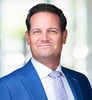
 

ACrisman_croppedweb

Anthony Crisman

Managing Director, Head of Healthcare – Investment Banking, Stout

Tony Crisman is a Managing Director and Head of Healthcare in the Investment Banking group. He has more than 20 years of experience executing over 100 successful M&A and capital-raising transactions for private equity, venture capital, publicly traded companies, and privately held and family-owned businesses operating in the healthcare industry. Tony specializes in M&A for highly differentiated, outsourced pharmaceutical and laboratory services businesses and life science companies (diagnostics and research products), helping them understand ever-changing and converging dynamic end markets, identify potential growth opportunities, and create value through strategic positioning. His deep industry expertise and expansive network in outsourced pharmaceutical and laboratory services end markets and their supply chain (life science companies) provides unique insights for assisting middle-market growth companies with finding their maximum strategic value.


Untitled Design (16)

Kevin Meredith

Founder, 4th Sector Innovations

Kevin Meredith is obsessed with innovation, particularly the grimy, difficult work of converting creativity into value and delivering impact at scale. For more than two decades, he has led innovation in the most highly regulated and scrutinized industries, from aerospace and defense to financial services and pharmaceuticals, carrying it from global attention to demonstrated value through the boom and bust cycles of each era's technology trends. Increasingly, that requires leadership in navigating the risks and realities of quantum systems, machine learning, and artificial intelligence. He got hooked on innovation at The Boeing Company, where he led enterprise-wide innovation efforts, and went on to found 4th Sector Innovations. As managing director of the InterPhase Incubator, Instantaneous pre-Accelerator, and Venture Residency programs, he provides the highest-risk early-stage startups and investors with the foundations for enduring value and outcomes. He holds advanced degrees in engineering and entrepreneurship and is an adjunct professor, keynote speaker, and author of Destination Innovation.


Untitled Design

Brian Munroe

CEO/Owner, JBRIANMUNROE.COM

Brian Munroe is thirty-year veteran of health car policy and lobbying in Washington, DC, every state capital, London, UK and the European Union. His primary focus was representing large public company pharma businesses, but his work over the years includes representation of health insurers, diagnostic companies, clinical laboratories and home health concerns. He is a widely regarded expert in policy issues concerning the FDA, Medicare, Medicaid, Vaccine, Personalized Medicine, and Liver Health. Brian is the Founder of the Personalized Medicine Coalition and speaks often about the Future of Medicine. He was most recently the Vice President of Government Affairs at Bausch Health and is currently the CEO/Owner of JBRIANMUNROE.COM, a health care consulting firm.


Sara

Sara Radcliffe

Head, Global External Affairs, US Pharmacopeia 

Sara Radcliffe is a nationally recognized expert on the impact of changes in regulatory, scientific, and reimbursement policy on the life sciences industry. She advocates for the acceleration of FDA approval of new drugs; a science-based regulatory environment; optimization of reimbursement for marketed drugs by public and private payers; policies to advance personalized medicine and emergency preparedness; and above all, health policy that maximizes biomedical innovation, patient safety, and patient access.

Sessions

Panel 1: Economic outlook and forecast: What are the Microeconomic and Macroeconomic impacts on capital markets and regulatory environment…how might it impact the life sciences system.
Economic conditions are reshaping how life sciences companies raise capital, plan, and operate. On the macroeconomic side, interest rates, inflation, trade and tariff policy, and the broader growth outlook influence investor appetite, valuations, and the availability of funding across venture, public markets, and M&A. On the microeconomic side, pricing pressure, reimbursement dynamics, supply chain and labor costs, and company-level cash runway determine which programs get funded and which partnerships get made.

This panel brings an outside of the box view from experts not necessarily in the space…maybe some simple economics principals, and looking at the view with a fresh perspective.

Panel 2: Patient Advocacy is driving outcomes in biotech discovery and development like never before, what is their place in the future.
Patient advocacy now more than ever influences and drives much of the process as it should.  Throughout the day, the patient and the “Advocacy Revolution” weaves its way into the fabric of the event supporting diligence, patient engagement, patient enrollment, trial design and the approval process.  

This panel highlights patients and the advocacy groups who have harnessed this unique and powerful leverage to drive results.

Panel 3: MedTech/Device VC Panel: Medtech VC?  Has medtech investing become so specialized that “Medtech VC” is no longer one category, but a collection of tightly defined vertical niches?
Medtech venture capital once felt like a single category, but that label is getting harder to defend. Investors increasingly build theses around tightly defined verticals such as cardiovascular, neuromodulation, robotics and surgical technology, diagnostics, digital health, and AI-enabled devices, each with its own clinical evidence bar, regulatory pathway, reimbursement dynamics, and exit profile. Specialization can sharpen diligence and give founders more informed partners, but it can also narrow the field of capital for companies that don’t fit a defined niche, and it raises the question of whether generalist funds can still compete. 

This panel will explore whether “medtech VC” is now a collection of distinct markets, how that shift affects fundraising, valuation, and syndicate-building, and what founders and investors should do differently as a result.

Panel 4: Life Science VC panel: I think I saw an IPO last month and even a few fundings…but is the nuclear winter for Life Science Venture Capital over and can we please get back to business.
After a long stretch of tight capital, down rounds, shuttered biotechs, and a nearly frozen IPO window, there are finally signs of movement: a few public offerings, some well-funded rounds, and renewed investor chatter. The open question is whether this is a true recovery or just a thaw. Investors are still selective, favoring clinical-stage assets with strong data, clear differentiation, and a credible path to the next financing, while many earlier-stage companies continue to face extended timelines and smaller checks. Interest rates, M&A appetite from large pharma, public market valuations, and an unsettled policy and regulatory backdrop all shape whether the window stays open. 

This panel will assess what is actually changing in fundraising, valuation, and exit activity, which therapeutic areas and company stages are attracting capital, and how founders and investors should plan for a market that may be better but is not back to its old rules.

Panel 5: AI has been my best friend since spell check…but what does it mean for drug discovery/development, better patient outcomes, and everything else but the kitchen sink.
AI has moved from a clever assistant to potentially a force reshaping life science, and the question is no longer whether it will matter but where it will matter most. In drug discovery and development, it is being applied to target identification, molecule design, trial design and patient recruitment, and regulatory submissions, with the promise of shorter timelines and lower costs. Beyond the lab, it is influencing diagnostics, clinical decision support, manufacturing, and commercial operations, all with implications for patient outcomes. The hype is running ahead of the evidence in places, and open questions remain around data quality, validation, regulatory acceptance, bias, and who captures the value. 

This panel will suggest what is working today from what is still aspirational, explore how AI changes the way companies discover, develop, and deliver therapies, and consider what leaders should do now to benefit without getting caught up in the noise.

Panel 6: Regulatory Spectrum in the 2027 and beyond: where should drug hunters even consider developing a therapy…has the burden punished those most in need.
Getting a product or technology approved by the FDA today demands a clear regulatory strategy from the start, so companies need to know which pathways apply and where to focus their evidence, engagement, and resources. That challenge grows as emerging technologies become more complex and often don’t fit a single category, which forces companies to decide how to approach multi-pathway approvals across drug, device, and biologic frameworks. Layered over all of this is a shifting political landscape: with the MAHA movement now holding a seat at the table, the FDA’s priorities, public expectations, and decision-making environment are changing, and companies must adapt how they plan, communicate, and engage.

Panel 7: Big Pharma Business Development: Trillions on the sidelines, when will Big Biotech be willing to pull the trigger on emerging technologies.
Large pharmaceutical and biotech companies are sitting on enormous balance sheets and facing looming patent cliffs, yet the pace of dealmaking on emerging technologies often feels slower than the capital available would suggest. Business development leaders must weigh the pull of de-risked clinical assets against the promise of earlier, riskier platforms such as new modalities, all while managing valuation gaps and  integration risk. 

This panel will explore how big-company BD teams decide where to place bets, what makes an emerging technology ready for a deal, how licensing, partnerships, options, and full acquisitions fit into the strategy, and what founders and investors can do to get a seat at the table sooner.

Panel 8: It is always sunny in San Diego, but these 5 Life Sciences companies have made it even more bright and hopeful for patients in need and the investors who took the risk.
San Diego has long been a quiet engine of life sciences innovation, and this panel spotlights five companies that are turning that momentum into real results. Each has pushed past the usual obstacles of clinical risk, capital scarcity, and regulatory uncertainty to deliver progress for patients who have been waiting for better options, and in doing so has rewarded the investors who backed them early. 

Through their stories, the panel will explore what these companies got right, from scientific differentiation and leadership to financing strategy and partnerships, how the SoCal ecosystem of talent, research institutions, and capital helped them succeed, and what lessons other founders and investors can take from their paths. It is a chance to celebrate what is working and to ask what it will take to make bright spots like these the rule rather than the exception.

